04 Aug Grand Gulf Celebrates 40 Years of Service in Southwest Mississippi
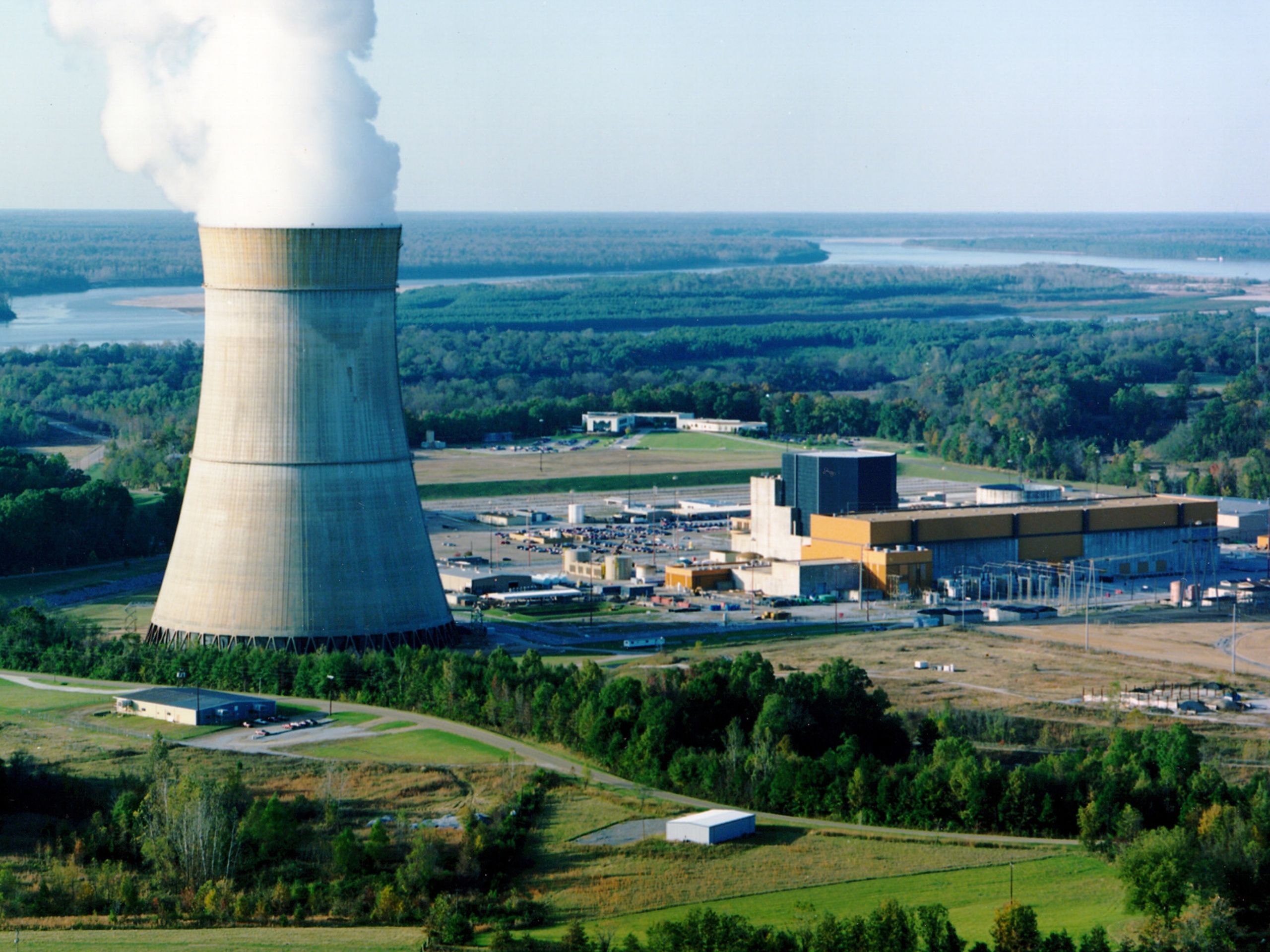
Grand Gulf Nuclear Station (GGNS), Mississippi’s first and only nuclear power plant, commemorates 40 years of commercial operation this year. The station holds the distinction as the largest single-unit nuclear generating facility in the United States and the fifth largest in the world.
In late 1971, Mississippi Power and Light (MP&L), now known as Entergy Mississippi, Inc. (EMI), decided to establish a nuclear plant at Grand Gulf, an unincorporated area in Claiborne County that was once a vibrant town on the Mississippi River. On January 22, 1972, MP&L officially announced the construction of the Grand Gulf nuclear facility through a press release. Soon after, on February 7, 1972, South Mississippi Electric Power Association (SMEPA), now known as Cooperative Energy, conveyed interest in acquiring a portion of the nuclear plant in a letter addressed to MP&L.
After three years of discussions with MP&L, substantial negotiations began in September 1975, ultimately leading to an agreement in 1980 in which SMEPA acquired a 10% undivided ownership stake in GGNS. This partnership required SMEPA to fund 10% of the plant’s construction costs and cover the same proportion of its operating and maintenance expenses and future decommissioning costs, in exchange for 10% of the electric power generated by the facility—an arrangement that remains in effect today. The remaining 90% is owned and operated by Entergy subsidiary System Energy Resources, Inc. (SERI).
The construction of GGNS spanned 14 years from project inception to completion. Grand Gulf commenced commercial operation in 1985 with an initial net capacity of 1,250 MW. In June 2012, Grand Gulf completed a power uprate, making it the largest single-unit nuclear power plant in the country. The project was one of the largest expansions of a nuclear power plant in U.S. history and increased Grand Gulf’s production by more than 13%. The uprate and expansion increased the plant’s net output to 1,443 MW and contributed to an overall increase in operating efficiency.
In 2016, the U.S. Nuclear Regulatory Commission (NRC) granted Grand Gulf a 20-year license extension, allowing the plant to operate through 2044. Grand Gulf remains one of the most affordable and responsible sources of electric energy in Mississippi, which helps attract new industry and encourages business and industrial expansion throughout much of the state. Partial ownership of the station provides Cooperative Energy with a competitive advantage in economic development pursuits.
“For four decades, Grand Gulf has grown into a regional powerhouse, providing safe, clean, carbon-free, affordable energy while serving as one of the largest non-carbon-emitting power plants in the world,” commented Mark Smith, senior vice president, power generation at Cooperative Energy. “In other words, the qualities that made Grand Gulf a sound investment in the 1970s are the same ones that continue providing benefits for Mississippi communities and the environment today.”
Grand Gulf boasts a team of more than 750 highly trained and dedicated nuclear professionals who are committed to their plant and their communities. GGNS continues to make an impact locally and nationally and is committed to maintaining lower-cost, reliable, carbon-free electricity in our region now and well into the future.
GGNS key personnel were presented with a Mississippi State Senate proclamation commemorating the 40th anniversary. The mayor of Port Gibson also declared April 9, 2025, as Grand Gulf Nuclear Station Day.
To learn more about Grand Gulf Nuclear Station’s rich history and Cooperative Energy’s involvement, read Staying Power: The Stories of South Mississippi Electric Power Association.
Grand Gulf construction facts:
· 40,000 tons of reinforced steel and 460,000 cubic yards of concrete were used to construct Grand Gulf Nuclear Station.
· Crews moved 8 billion yards of earth to construct the nuclear facility.
· The construction of Grand Gulf Nuclear Station was the largest construction project in the state’s history when crews broke ground in 1974.
· The plant was named for the nearby historic community of Grand Gulf, located just outside Port Gibson. “Grand Gulf” was derived from the dangerous river whirlpools that early travelers described as wide enough to engulf large vessels.
Reprinted with permission of Cooperative Energy